

Frontiers in Genomics: Oana Carja
A theory of evolutionary dynamics on any complex population structure
Zoom
Resumen de la plática At a big picture level, my group at CMU is focused on studying the adaptive properties of spatial structure, across different biological systems. Spatially-resolved datasets are revolutionizing knowledge across many areas in biology, yet are under-utilized for questions in evolutionary biology. When it comes to understanding the role that population structure […]
Frontiers in Genomics: Tami Lieberman
Using on-person mutation to study strain coexistence and competition in skin microbiomes
Auditorio "Dr. Guillermo Soberón" del CCG
Centro de Ciencias Genómicas UNAM Morelos, Cuernavaca, Morelos, Mexico
Summary: Human microbiomes are remarkably person specific. In the skin microbiome, individuals have similar species, yet each person has a unique consortia of strains. How these unique consortia form and persist remains a fundamental open question. To understand the assembly of these complex communities, the Lieberman Lab reconstructs the recent on-person evolution of strains on […]
Frontiers in Genomics: Alicia Martin
Genomics for the world: ancestral diversity enhances genomic discovery, resolution, interpretation, and contextualization
Auditorio "Dr. Francisco Bolivar" del IBt
Instituto de Biotecnología UNAM Morelos, Cuernavaca, Morelos, Mexico
Resumen de la plática Genomic studies are transforming precision medicine, yet their benefits often overlook diverse, underserved populations. Our research shows that embracing ancestral diversity not only addresses this ethical concern but also enhances genomic discovery, resolution, interpretation, and contextualization. Analyzing lung diseases across multiple biobanks, we found consistent genetic effects and improved our understanding […]
Frontiers in Genomics: Birte Hocker
Protein Design 2.0
Zoom
Resumen de la plática Proteins are the machines of life. These diverse macromolecules are essential for all cellular processes. Nature has generated an impressive set of proteins through evolution. Many of its structures and even more sequences are known by now. This enormous amount of data can be leveraged for protein design. The design of […]
Frontiers in Genomics: Alfredo Hidalgo
Tecnologías de secuenciación masiva y su impacto en la investigación y el manejo clínico del cáncer
Auditorio "Dr. Francisco Bolivar" del IBt
Instituto de Biotecnología UNAM Morelos, Cuernavaca, Morelos, Mexico
Resumen de la plática El cáncer surge debido a la acumulación de alteraciones en el genoma de las células. Estas alteraciones pueden ir desde mutaciones puntuales hasta pérdida y ganancia de cromosomas completos. La caracterización de estas alteraciones en el genoma de las células neoplásicas a través de la aplicación de metodologías de análisis genómico […]
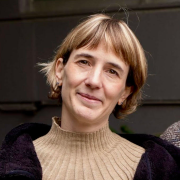
Frontiers in Genomics: Mayra Furlan
RNA molecules promote RNA Polymerase II pausing in erythrocytes
Auditorio "Dr. Guillermo Soberón" del CCG
Centro de Ciencias Genómicas UNAM Morelos, Cuernavaca, Morelos, Mexico
AVISO: por solicitud de la ponente, este seminario no se transmitirá por YouTube. Resumen de la plática Erythrocytes are specialized cells that carry haemoglobin throughout the bloodstream in all vertebrates. Obtention of mature erythrocytes involves genome-wide chromatin compaction, gain of heterochromatin, and gene silencing, making the erythroid genome a unique scenario to investigate chromatin architecture […]
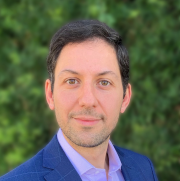
Frontiers in Genomics: Shushkov Philip
Computational inference and integration in single-cell transcriptomics
Auditorio "Dr. Francisco Bolivar" del IBt
Instituto de Biotecnología UNAM Morelos, Cuernavaca, Morelos, Mexico
Resumen de la plática Understanding the transcriptional dynamics at the single-cell level is a central challenge in deciphering developmental processes. Current sequencing technologies allow the measurement of the transcription profiles of hundreds of thousands of individual cells. However, integration of multiple single-cell transcriptomic datasets and inference of developmental progressions of cells is hampered by sampling […]
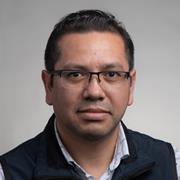
Frontiers in Genomics: Artemio Mendoza
Lenguaje químico de Trichoderma: metabolitos, volátiles y enzimas en la comunicación con plantas y microorganismos
Zoom
Resumen de la plática Los hongos del género Trichoderma son modelos que permiten entender la comunicación molecular entre microorganismos y plantas. En esta charla se abordará cómo tres tipos de compuestos secretados por Trichoderma —metabolitos secundarios, volátiles orgánicos y enzimas líticas— impactan el crecimiento de las plantas y el establecimiento de asociaciones simbióticas o patogénicas, […]
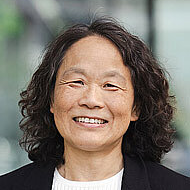
Frontiers in Genomics: Elly Tanaka
How are adult tissues regenerated at scale?
Zoom
Resumen de la plática The capability to regenerate entire body parts is observed in some animals. Although they have the same basic bodyplan as other tetrapods, salamanders can regenerate many bodyparts including limbs, heart and the primary body axis. While these structures form during embryogenesis, the same structures must then regenerate at much larger scales. […]
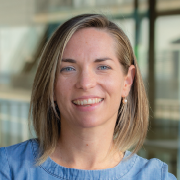
Frontiers in Genomics: Talya L. Dayton
Decoding neuroendocrine cancers: insights into initiation, progression, and therapeutic vulnerabilities from human organoid models
Auditorio "Dr. Guillermo Soberón" del CCG
Centro de Ciencias Genómicas UNAM Morelos, Cuernavaca, Morelos, Mexico
Resumen de la plática Despite accounting for only 0.5% of the lung epithelium, pulmonary neuroendocrine (NE) cells give rise to a cancer type that accounts for a significant percentage of lung cancers (20 to 25%), including highly aggressive NE carcinomas and pulmonary NE tumors (carcinoids). The diversity of clinical behaviors displayed by these vastly understudied […]